


The story
Everyone deserves a place to call home – a safe space where stability and dignity can flourish. For more than 30 years, Pathlight HOME has worked to turn that belief into reality. Its mission is simple: to change the lives of homeless and low-income individuals through affordable housing and economic opportunities.
Founded in 1992 in Orlando, Florida, the nonprofit was born out of a shared vision between the Rev. Fred Maxwell, a pastor, civil rights leader and advocate for the homeless, and attorney Helaine Blum. Together, they formed the Grand Avenue Economic Community Development Corp. to transform existing buildings into housing for those in need. They first renovated a 75-unit motel, now known as Maxwell Terrace Apartments. A second property followed, now Maxwell Garden Apartments.
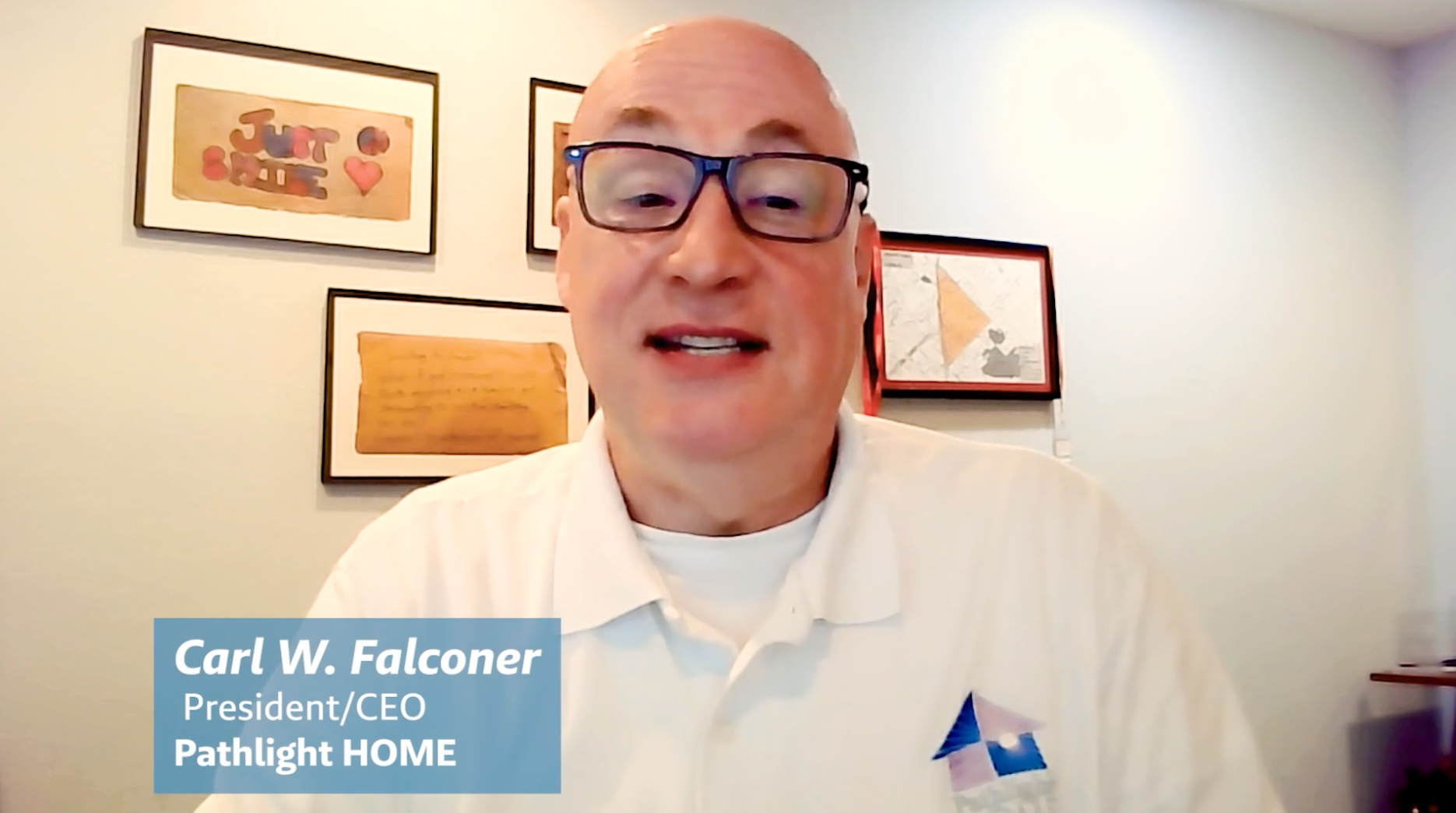
“I think they knew that housing was the answer to homelessness,” said Carl Falconer, president and CEO.
Eventually, the organization became Pathlight HOME. Falconer said the name reflects “shining a light and giving a path towards getting home.”
From the beginning, Pathlight HOME has embodied the “housing-first” model, which prioritizes permanent housing without requiring individuals to meet specific conditions, such as sobriety or employment. That philosophy continues to shape how the organization operates and who it serves.
“Homelessness is a housing problem,” Falconer said. “We’re moving people into housing and then providing services to help them improve their lives after that.”
This approach has welcomed people from all walks of life. “We see just about everyone who’s out on the street,” said Danny Arroyo, vice president of programs. “But we are seeing an increase in the elderly population in our housing.”
Pathlight HOME provides both program-based and market-rate housing options across Maxwell Terrace and Maxwell Garden Apartments, offering a total of 560 single-occupancy units.
The program-based housing includes three initiatives – Restore, Homes for New Beginnings and Safe Haven – designed to serve chronically homeless, disabled adults with little to no income. Each program requires a referral from the Homeless Services Network of Central Florida, which connects people to housing and regional support services. Participants receive rental subsidies and ongoing case management.
Market-rate units do not include subsidies or case management; however, tenants must have a source of income. All prospective residents must complete an application and meet eligibility requirements, which include background and credit checks.
“We try to give applicants as much information as possible when they come in,” Arroyo said. “If they’re missing anything, we do our best to help. They can go to our Employment Resource Center to print a bank statement or if they need an ID, we’ll help them work on getting one.
“Our goal is to make the process as quick as possible, just to get them off the street and into a unit.”
Despite these efforts, demand for affordable housing remains high. The organization operates at near full capacity year-round.
“Around 70% of our individuals are working or have some kind of income,” Falconer said. “It comes down to affordability for most of the individuals we’re serving.”
Beyond housing, Pathlight HOME fosters a sense of community and belonging. Residents follow basic community guidelines, and the nonprofit hosts activities like bingo and movie nights to help individuals feel at home. Leases can be renewed annually, with no limit on how long residents can stay.
“We’re trying to be a place where people can get themselves back together, build themselves up and then move on to something better,” Falconer said.
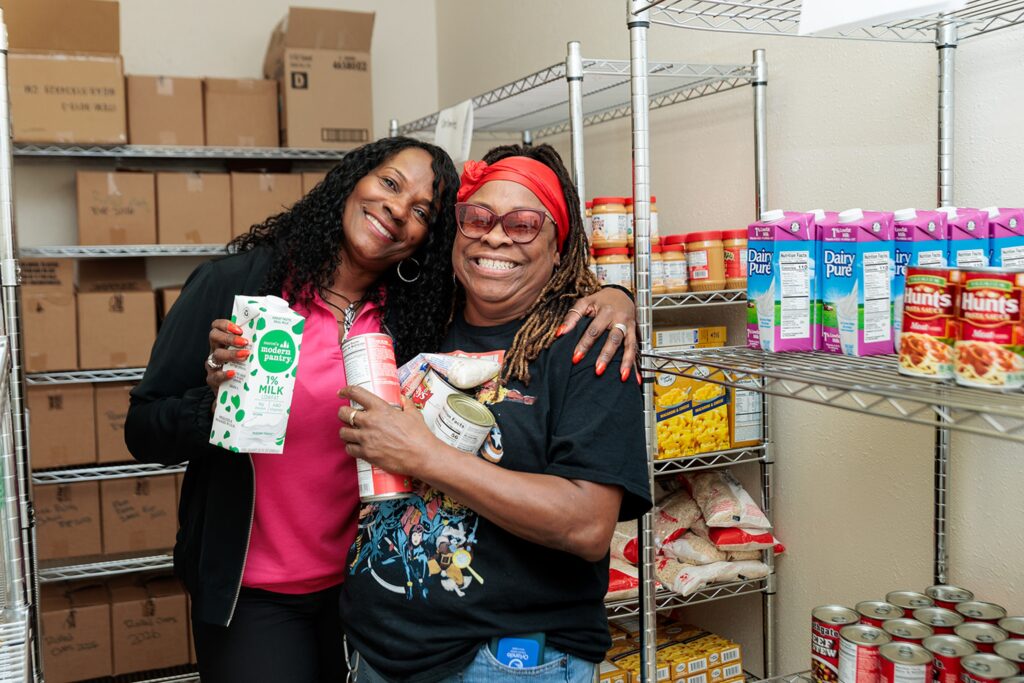
That vision drives the organization’s two-pronged approach: to provide housing first, then deliver wraparound services to support long-term success. From employment training and resources to food pantries and marketplaces, the nonprofit provides a permanent home and the tools to thrive.
For those still unsheltered, the Pathways Drop In Center offers meals, showers, counseling and case management. It’s often the first step toward housing, helping people build trust and begin their journey toward stability.
“We have the housing, and we can certainly move people into it,” Falconer said. “But sometimes it takes people a little while to get everything together to make that move.”
A cornerstone of Pathlight HOME’s job readiness efforts is its culinary training program. This free 12-week course is open to both residents and the broader community. It provides certifications and hands-on experience to help participants start careers in Orlando’s growing food-service industry, and it has seen great success.
“We’ve hired two of our culinary arts students – one is now an assistant chef helping train others, and the other cooks meals at our Pathways Drop In Center,” Falconer said. “We’ve also had graduates go on to work in hotels, start food trucks and join restaurants across the area.”
The program operates out of Pathlight Kitchen, a versatile event space that also includes two rental commercial kitchens and a banquet hall for private events. Pathlight Kitchen is one more way the organization supports the community and fosters opportunities for success.
Community impact
Over the past three decades, Pathlight HOME has served more than 8,000 individuals, staying true to its mission of transforming lives through housing and economic opportunities.
In recent years, it has broadened its efforts through outreach services. One initiative, the No Buddy Left Behind program, focuses on supporting homeless veterans.
For Falconer, an Army veteran himself, the program holds a deeply personal meaning. He recalled one story that continues to resonate.
“The story that hits me the hardest is when our outreach worker approached a veteran and told him he could help. The man said, ‘I don’t believe you.’”
Four weeks later, the man was handed the keys to his own apartment.
“That, to me, says it all,” Falconer said. “We take what’s unbelievable and we turn it into the possible.”
Being recognized as an Insperity® Community Hero further amplifies Pathlight HOME’s purpose, an honor Falconer calls humbling.
“We like to feel like we’re doing good work,” Falconer said. “And I think that’s what this Insperity Community Hero Award means to us – we’re on the right path.
“This is our life. If you talk to the people that are here, it’s not their job, it’s their life.”
The award’s $5,000 charitable donation will be reinvested into the nonprofit’s programs. One initiative on the horizon includes developing a community wellness center to support health care needs.
Pathlight HOME’s partnership with Insperity is invaluable in bringing these efforts to life. With a team of HR specialists easing the administrative load and offering strategic HR guidance, the team can stay focused on what matters most: restoring hope and rebuilding lives.
“We’re experts in serving people,” Falconer said. “Insperity is an expert in helping with human resources, the behind-the-scenes stuff.”
Looking ahead, Pathlight HOME sees Insperity as a trusted partner on the journey. “We’re happy to be on the path with Insperity,” Falconer said. “And we’re glad Insperity is here to support us as we continue to grow.”

“We’re experts in serving people. Insperity is an expert in helping with human resources, the behind-the-scenes stuff.”
Carl Falconer
President and CEO
Pathlight HOME