
Combatting hunger through compassion
Imagine being hungry and having to prove you deserve to eat.
Unfortunately, that’s the reality for the nearly 50 million Americans experiencing food insecurity. They’re often met with judgment and shame, having to fill out pages of paperwork and jump through hoops to get the resources they need.
But what if there were a place where none of that mattered? A place where respect came first and food was given freely to those in need?
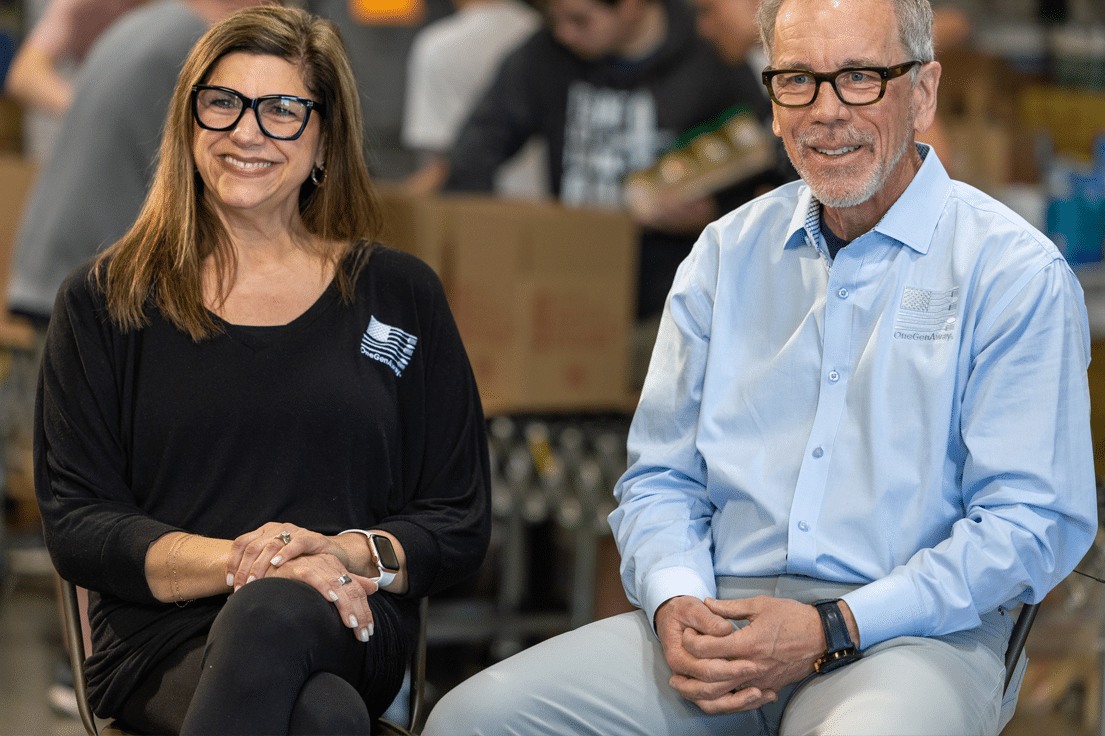
That’s the vision Chris Whitney had when he started an organization to feed hungry members of his community. He believes that people shouldn’t have to prove they’re “sufficiently deficient” to receive food, and it’s important to him that people retain their dignity during periods of struggle.
“This is just a beautiful opportunity for us to walk beside people and remind them that this is just a temporary season,” Whitney said.
Whitney’s vision of serving others became One Generation Away, a nonprofit that rescues surplus food from grocery stores and restaurants and redistributes it to people experiencing food insecurity in Middle Tennessee, North Alabama and the Florida panhandle.
“One Generation Away is full of really good people helping really good people that are having a hard time,” said Ann Curry, a frequent volunteer at the nonprofit.
A seed of an idea bears fruit
One Generation Away started with co-founders Chris and Elaine Whitney filling up their Hyundai Santa Fe with rescued food and taking it to low-income communities, serving people out of the back of their car.
In 2013, One Generation Away’s first year, it provided 150,000 meals. Today, it distributes the same amount in about three days.
While it might seem like hunger stems from food shortages, plenty of groceries go to waste each week in communities around the world. Instead, hunger is the result of a logistics problem. One Generation Away works to solve this through rescuing surplus food and redistributing it.
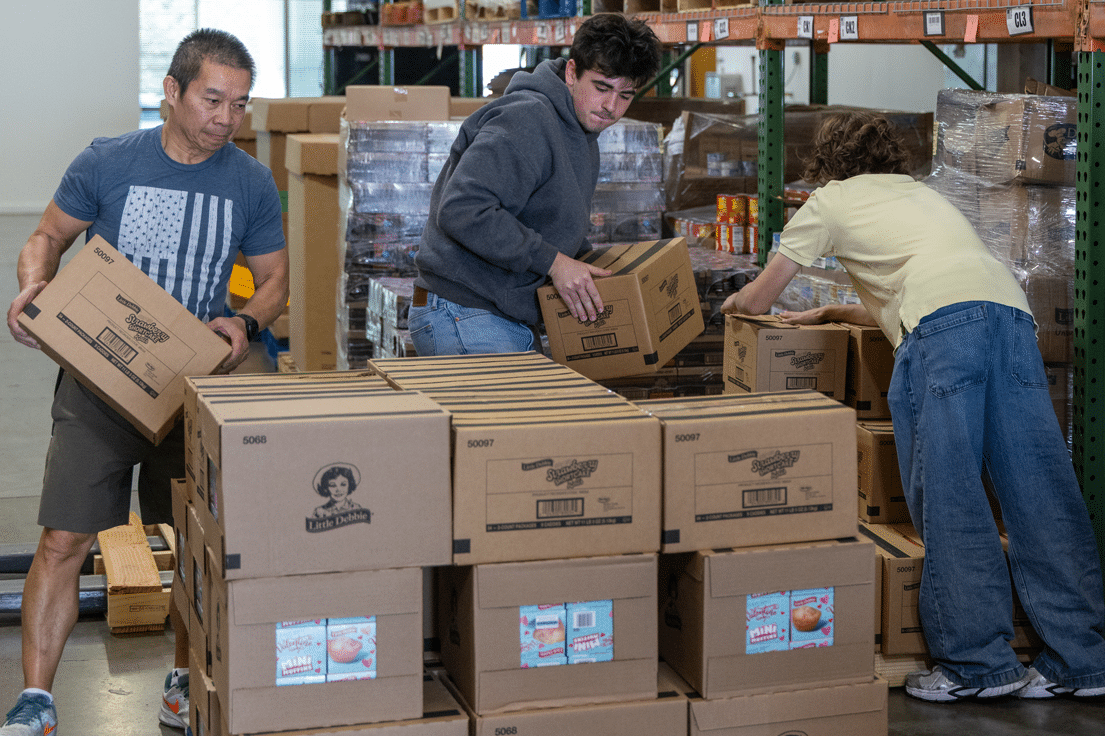
“Our trucks go out from our facilities empty, and they come back empty, so it’s not a matter of taking it back to a warehouse where it will sit. It’s literally as fresh as you would pick up from the store today,” said Chris Henson, Director of Operations for One Generation Away. “When we talk about what we’re rescuing, it’s on somebody’s plate within 24 hours.”
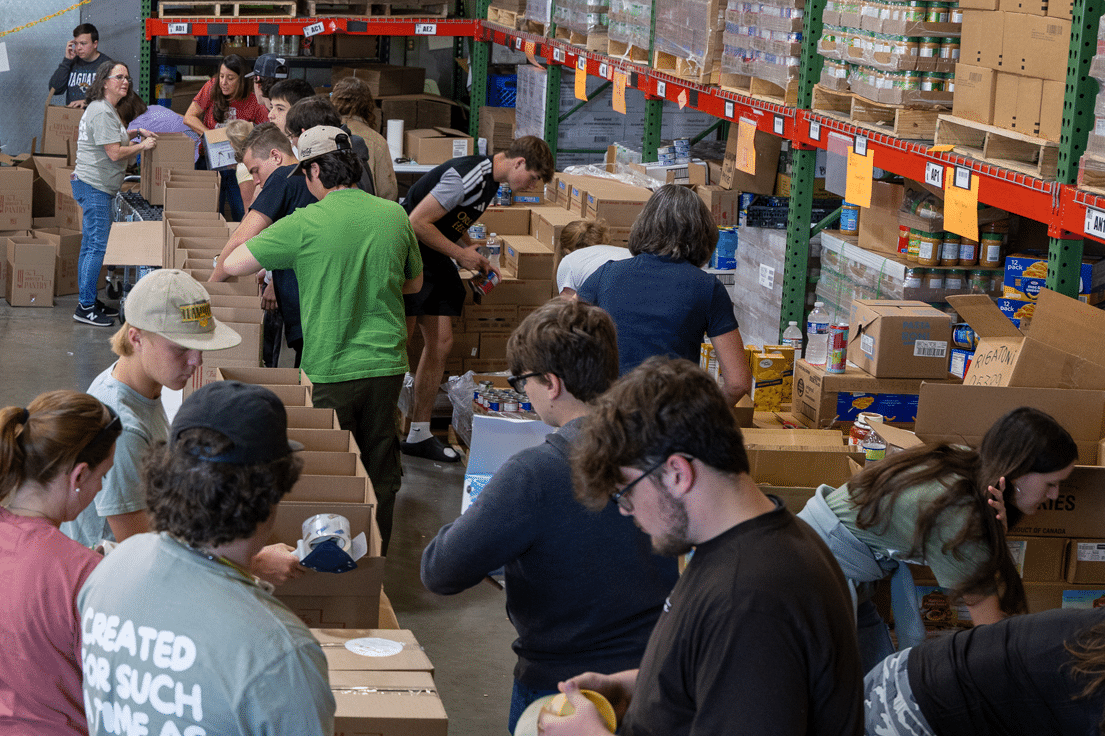
The nonprofit has different methods for distribution. It takes pallets of food to senior living communities and lets residents “shop” for their kitchens. It delivers food to doorsteps when those in need don’t have reliable transportation. But its longest-running event is its mobile pantry, which takes place in parking lots and allows members of the public to get produce, baked goods and nonperishables for free.
One volunteer described the atmosphere of a mobile pantry event as a cross between a tailgate and a family reunion, a joyous time when people can come together and share food.
One Generation Away doesn’t just serve individuals facing food insecurity, though. It partners with other nonprofits to help them meet the needs of their communities.
Helping others help others
Every Wednesday, nonprofits can pull up to a One Generation Away warehouse and load their trucks with food and supplies. Due to the nature of food rescue, the hauls look different each time.
It’s understood that hunger is a precipitating factor for many societal issues. The goal is to help these organizations stabilize communities by minimizing food insecurity.
“One Generation Away brings everybody to the intersection, whether it’s domestic violence, homelessness, foster care, senior citizens, community school partners, all of us,” said Laura Little, Director of Woodbine Community Organization, a frequent partner of the organization’s. “Food is about community and bringing people together, and that’s what One Generation Away does – it brings us together.”
For example, One Generation Away partnered with two local middle schools to identify people who needed extra resources over spring break because the children wouldn’t have access to cafeteria meals. It provided food to 30 families before school let out for vacation.
And while sharing food is its main method for serving its community, One Generation Away also procures other essentials for nonprofits. Debora Lambert, Director of Programs at The Mary Parrish Center, recalled a time she reached out to One Generation Away to see if it had mattresses. She explained they were for a family moving into their own apartment after fleeing domestic violence, and within 48 hours, One Generation Away had supplied the beds.
Lambert summed up One Generation Away succinctly: “A wealth of blessings and a wealth of nutrition.”
Bringing the pantry to people’s doorsteps
The team is working to make nutrition even more accessible to community members.
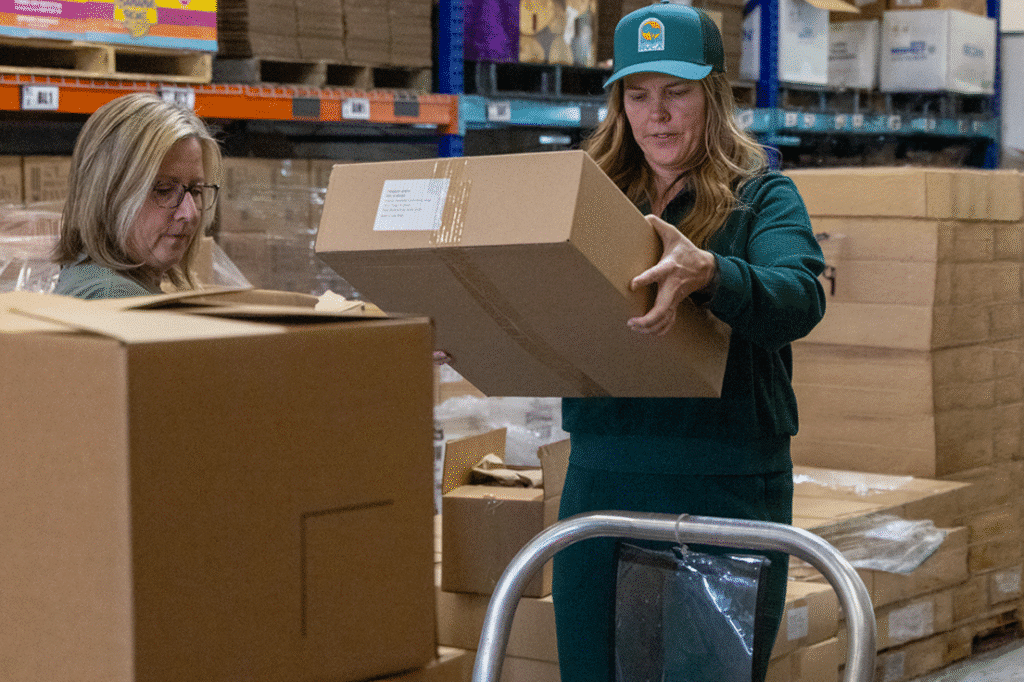
The organization’s newest program, Doorstep Pantry, helps people experiencing transportation insecurity. People who live close to a One Generation Away warehouse or participating partner can go to the nonprofit’s website and request free delivery of a food box.
Each box contains 18 to 19 pounds of nonperishable food, with staples such as peanut butter, beans and pasta.
One Generation Away also uses these boxes for disaster relief and to respond to other unforeseen circumstances. Recently, the nonprofit distributed them to TSA workers who were working without pay during the government shutdown.
A need for strategic HR
All the work One Generation Away is doing wouldn’t be possible without its employees, and as its operations grew, so too did its team. As more employees came on board, leadership realized they needed a formal human resources strategy in place, but they weren’t sure where to start.
The Whitneys are firm believers in delegation, quoting the well-known proverb, “If you want to go fast, go alone. If you want to go far, go together.”
So, they sought outside help.
Todd Bowman, an Insperity Business Performance Advisor, was happy to show them how a professional employer organization (PEO) could help streamline their employer-related duties.
Over the years, the nonprofit has expanded how it uses Insperity’s services. What started as a partnership built on HR compliance, payroll and time and attendance assistance has grown to include learning and development, talent recruitment and compensation guidance. By introducing more strategic HR initiatives, One Generation Away is creating a culture that empowers its team.
The work with Insperity continues. Its latest project involves working with a performance specialist to develop a performance management strategy that rewards employees for their outstanding work.
“You can’t afford not to partner with Insperity. It’s worth the investment, I promise you,” said Elaine Whitney, co-founder of One Generation Away.
Hard work pays off
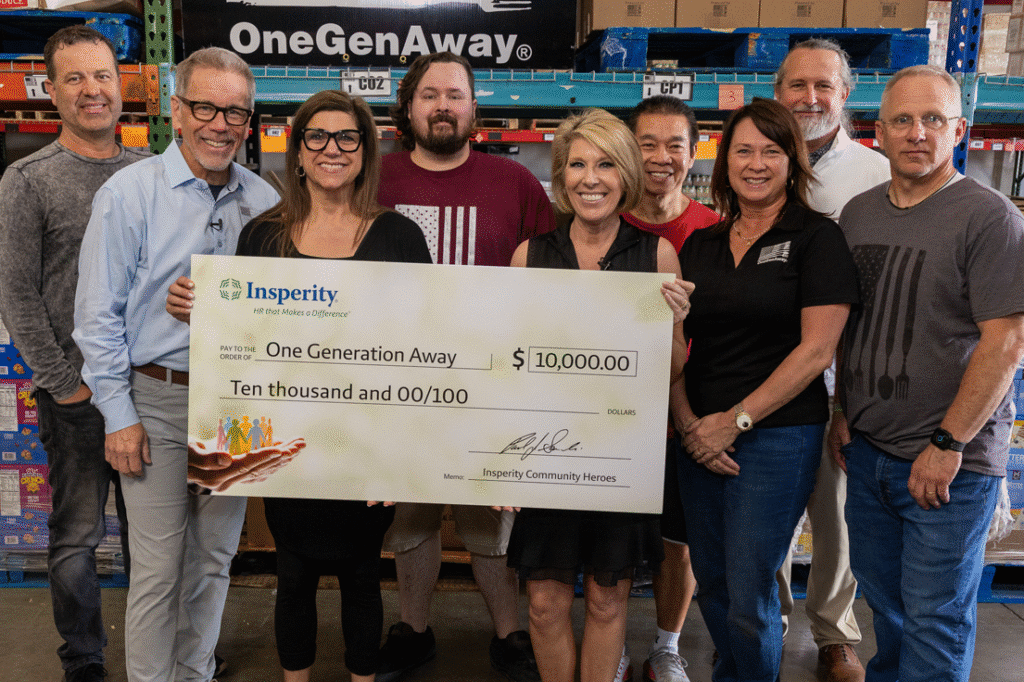
The Whitneys were thrilled to find out that One Generation Away had been named a 2026 Insperity Community Hero, an honor that recognizes nonprofits for their dedication to missional impact, innovation and collaboration.
“When we learned about getting this award from Insperity, I was floored,” Chris Whitney said. “It wasn’t that long ago that One Generation Away began, and now we’re sitting in front of one of the largest PEOs there is, and you’re honoring us.”
Bowman, who also serves as a member of the nonprofit’s board of directors, nominated the organization.
“It was so impressive to see its evolution into a full-fledged logistics company that’s still rescuing food and getting it where it needs to go,” Bowman said.
As part of the award, One Generation Away received a $10,000 donation that can be used to provide over 26,000 meals, helping it carry its mission into the future.
On the horizon
The team at One Generation Away has a lot to look forward to. It’s planning a new event called Lola’s Table where influential women come together to pack Doorstep Pantry boxes. The event gets its title from the nickname Elaine Whitney’s grandchildren have given her.
But the plans don’t stop there.
As the employees continue their mission of honoring the humanity in every person they serve, One Generation Away estimates it will provide its 50 millionth meal in November.
And at the heart of this work lies the founders’ driving purpose.
“We just want to love people, give hope and bring back their dignity,” said Elaine Whitney.
“Food is about community and bringing people together, and that’s what One Generation Away does – it brings us together.”
Laura Little
Director
Woodbine Community Organization