
Shooting for the stars
Remember being asked, “What do you want to be when you grow up?” For many kids, the answer is simple: astronaut.
They picture rockets and space suits and the excitement of it all. Or maybe their dreams don’t involve space at all, but feel equally lofty: doctor, engineer, computer scientist. But as they get older, these goals may start to feel abstract.
That’s where Challenger Center steps in, showing kids that a future in science, technology, engineering and math isn’t just possible – it’s within reach.
“For decades now, studies have shown that kids have a hard time perceiving themselves in a STEM career. They don’t quite know what that looks like,” said Mike Kincaid, President and Executive Director of Challenger Center. “So, to be able to bring kids into a setting where they can see themselves as engineers and scientists and doctors working with others, that really matters.”
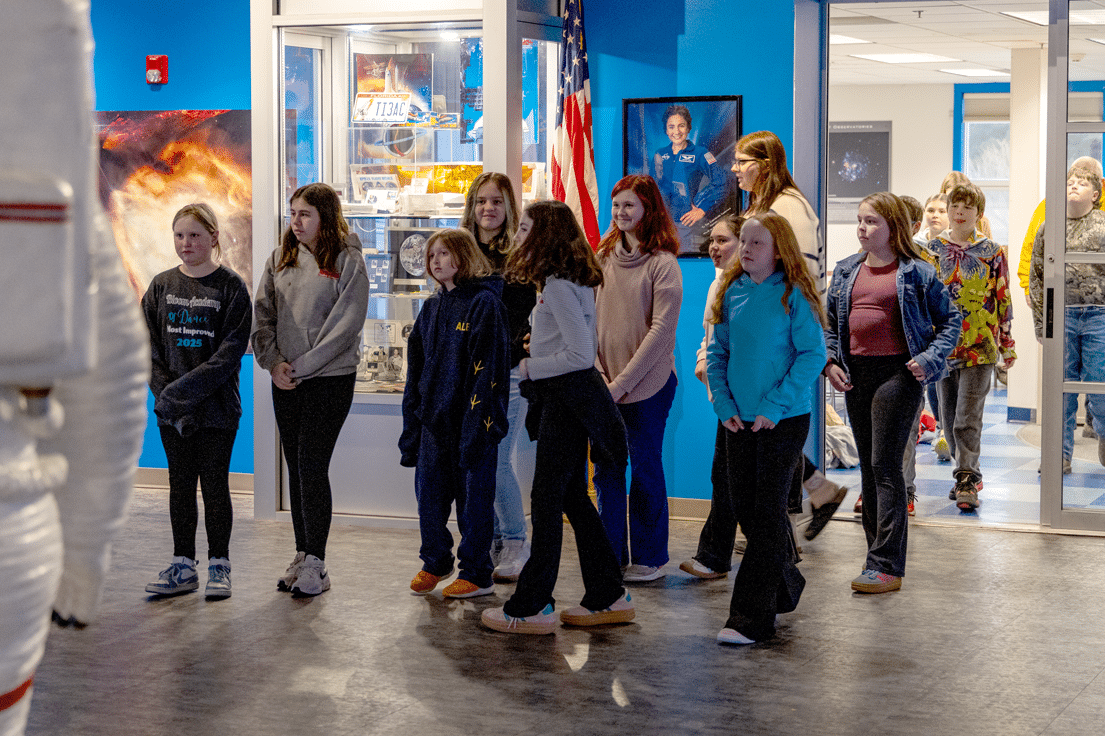
With 32 locations throughout the U.S., Challenger Center offers hands-on field trips that put students on their own journey to space. These missions connect the subjects they’re studying in school to real-life scenarios and provide the inspiration to continue dreaming big.
A hands-on approach to STEM
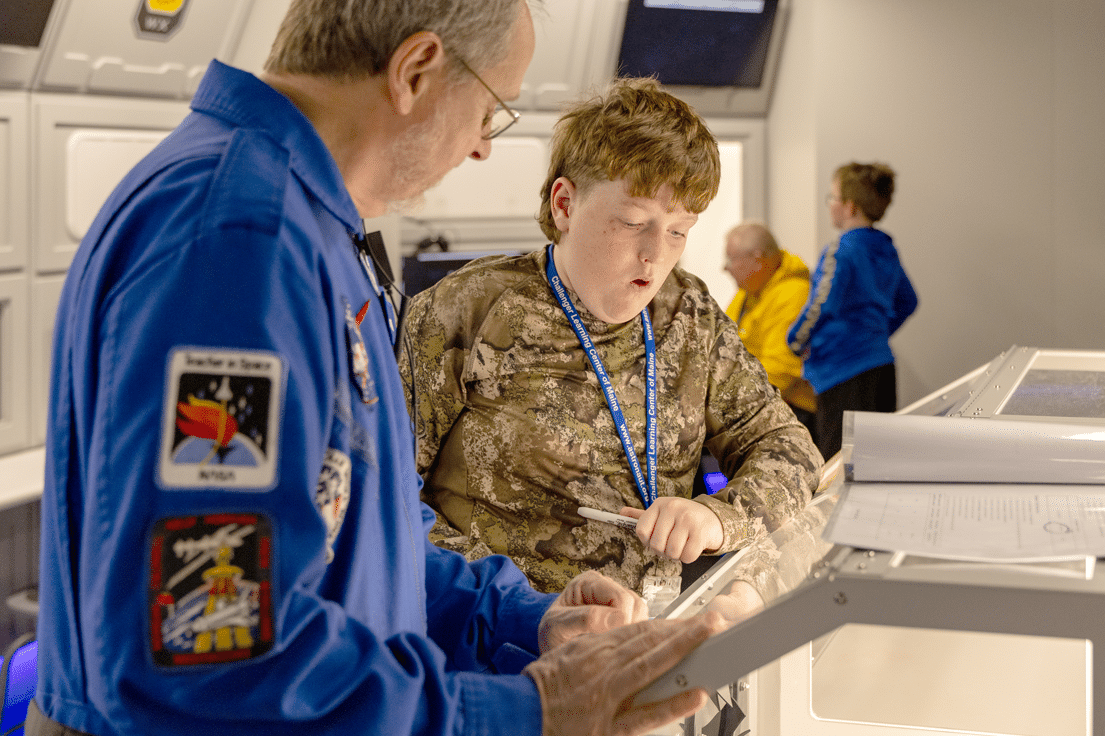
When students arrive, they’re greeted by a flight director in a blue suit. The excitement builds as roles are assigned: navigation, medical, robotics and more.
Each student learns whether they’ll be stationed in mission control or heading to space to work in the spacecraft lab. Every role has a counterpart, creating a team dynamic that mirrors real-world missions.
Then, it’s on to the briefing room, where the flight director explains their mission. It could be studying a comet passing by Earth or getting a team of astronauts to the moon.
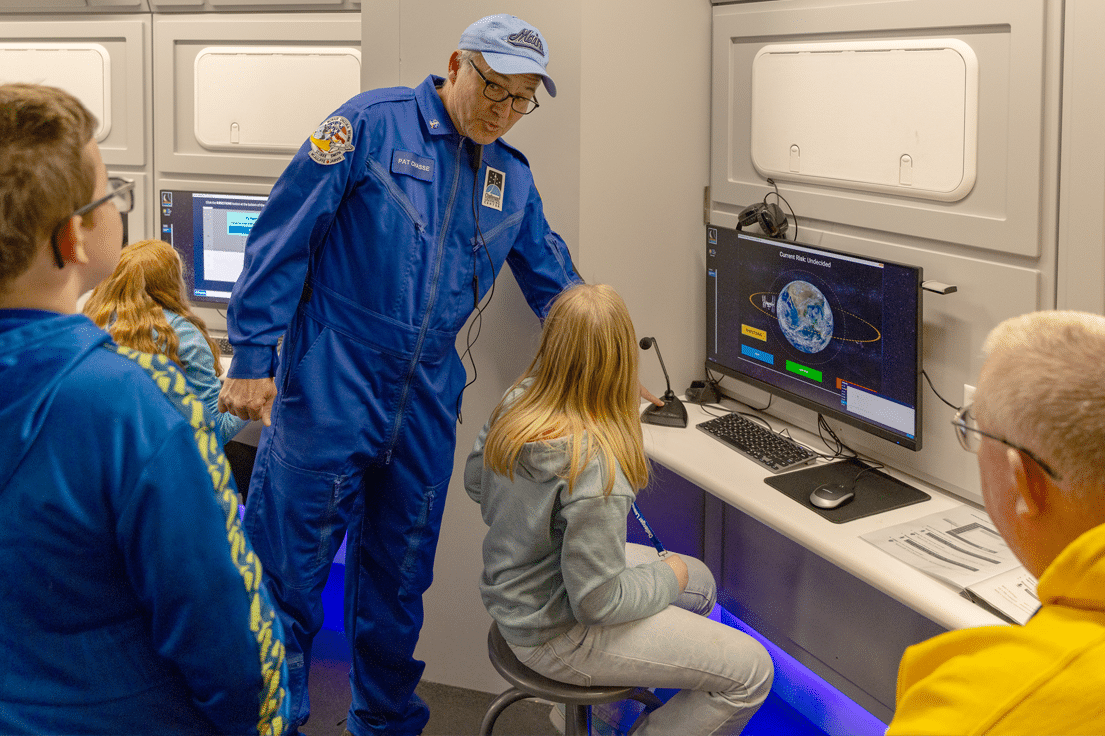
The experience is immersive, with the astronauts heading to the lab in a “shuttle” and entering through an “airlock.” Meanwhile, those on Earth are at workstations modeled after NASA’s mission control in Houston, Texas.
The magic of Challenger Center isn’t just in its storytelling – it’s the experiential learning that truly brings the experience to life.
For example, the communications team shares important updates through an intercom system that connects mission control and the space lab. The medical team monitors astronaut vitals, from body temperature to oxygen levels. And the weather team tracks events that may impact the mission and the astronauts’ safety.
Throughout this process, students use tools like robotic arms, 3D printing pens and scanning thermometers.
And while all this may seem intimidating to a child entering a Challenger Center for the first time, they quickly acclimate and realize they’re capable of rising to the occasion.
“I’ve visited Challenger Centers where a teacher will come up to me and say, ‘You know that kid right there? He never participates in class, but he is locked in here.’ And to be able to see these kids come to life in a setting like this is such an amazing thing,” Kincaid said.
Bringing out the best in students
In the weeks leading up to the field trip, educators play just as vital a role as the Challenger Center team in bringing these missions to life.
For example, teachers may have students “apply” for the job they wish to perform at Challenger Center, listing relevant experience and sharing why they want to perform those duties. Other times, they may make judgment calls in assigning roles, hoping to nurture qualities they see in their students.
“Sometimes, teachers are really masterful at looking at students and saying, ‘Well, this student is normally really silent. I’m going to make them the comms officer because now they have to communicate,’” said Kevin Harrell, Vice President of Education at Challenger Center. “Sometimes teachers push students in different ways to bring the best out in them.”
A tradition of learning
This commitment to sparking curiosity and fostering learning is deeply rooted in Challenger Center’s purpose to honor the Challenger Seven and their legacies.
In 1986, the Challenger STS-51L mission included the first private citizen chosen to go into space, a teacher named Christa McAuliffe.
“One of her mission directives was to engage kids in STEM,” said Michael Cruz, Vice President of Technology and Enterprise Operations at Challenger Center. “She was going to teach lessons in space and transmit them across the world to kids.”
The promise of that mission was never realized. Just 73 seconds after liftoff, the Challenger shuttle broke apart, a heartbreaking moment broadcast live to millions and forever etched into the memory of a generation.
After the tragedy, the surviving families of the astronauts came up with the concept of Challenger Center to honor their loved ones’ mission. The nonprofit has served over 6.5 million children since 1986 and celebrated its 40th anniversary of championing STEM education in 2026.
Adapting to change
However, Challenger Center’s mission was temporarily disrupted in 2020 by the COVID-19 pandemic.
As schools went online and field trips halted, the team at Challenger Center knew it needed a remote option. This resulted in Satellite Challenges, space-themed virtual experiences delivered to students in real time by Challenger Center flight directors using video conference technology.
Recognizing the impact of its virtual programming, Challenger Center now uses Satellite Challenges to reach schools outside the geographic range of a learning center. The team has even conducted Satellite Challenges for students in other countries, including Ireland and Morocco.
Strategic support for a stronger team
Supporting this level of innovation takes a strong internal foundation, which requires an intentional approach to taking care of the people who keep Challenger Center going.
Since 2010, the nonprofit has partnered with Insperity for both strategic HR guidance and hands-on support, an important part of the nonprofit’s continued success. Challenger Center’s leadership works closely with Insperity’s team through biweekly touchpoints, leveraging the HR provider’s insights to the fullest – from strategic planning to day-to-day support.
In their most recent collaboration, Insperity and Challenger Center focused on updating job titles and making pay adjustments to better align with the organization’s mission and goals. Insperity has been instrumental in the process, offering performance management guidance to bolster the current team.
Becoming an Insperity Community Hero
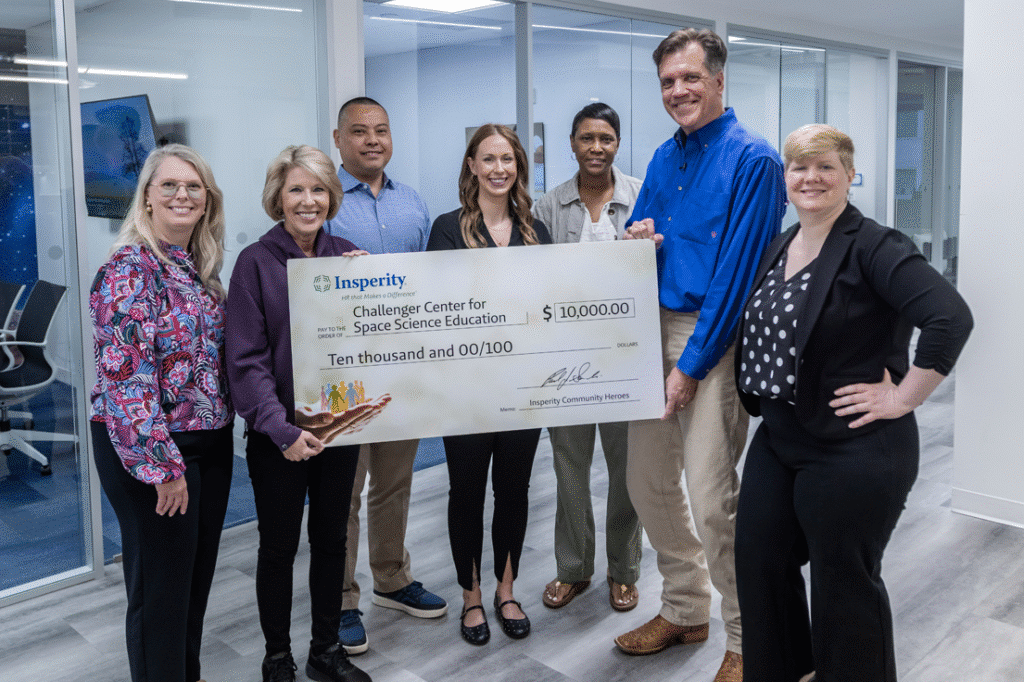
The relationship doesn’t end there, though. Challenger Center was named a 2026 Insperity Community Hero, recognizing the nonprofit for its impact on students. This was a proud moment for the team.
“Challenger Center has a very long and storied history, but a lot of times, the message of what we are isn’t necessarily broadly known,” Cruz said. “Having an organization like Insperity amplify our message is a tremendous gift for us.”
Susan Groter, Challenger Center’s Insperity Business Performance Advisor, nominated the organization.
“Challenger Center is a Community Hero because it combines innovation, collaboration and measurable impact to create lasting change,” Groter said. “Its mission‑driven work reflects the kind of leadership and values Insperity is proud to support and celebrate.”
The award comes with a $10,000 donation, which can fund 25 Satellite Challenges for schools around the world, providing inspiration to even more children.
“We hope this spark is what takes students to the next level and continues to pique their interest in these STEM careers so they will continue learning about them when they go to middle school, high school and then, hopefully, college,” Cruz said.
“For decades now, studies have shown that kids have a hard time perceiving themselves in a STEM career. They don’t quite know what that looks like. So, to be able to bring kids into a setting where they can see themselves as engineers and scientists and doctors working with others, that really matters.”
Mike Kincaid
President and Executive Director
Challenger Center