

The story
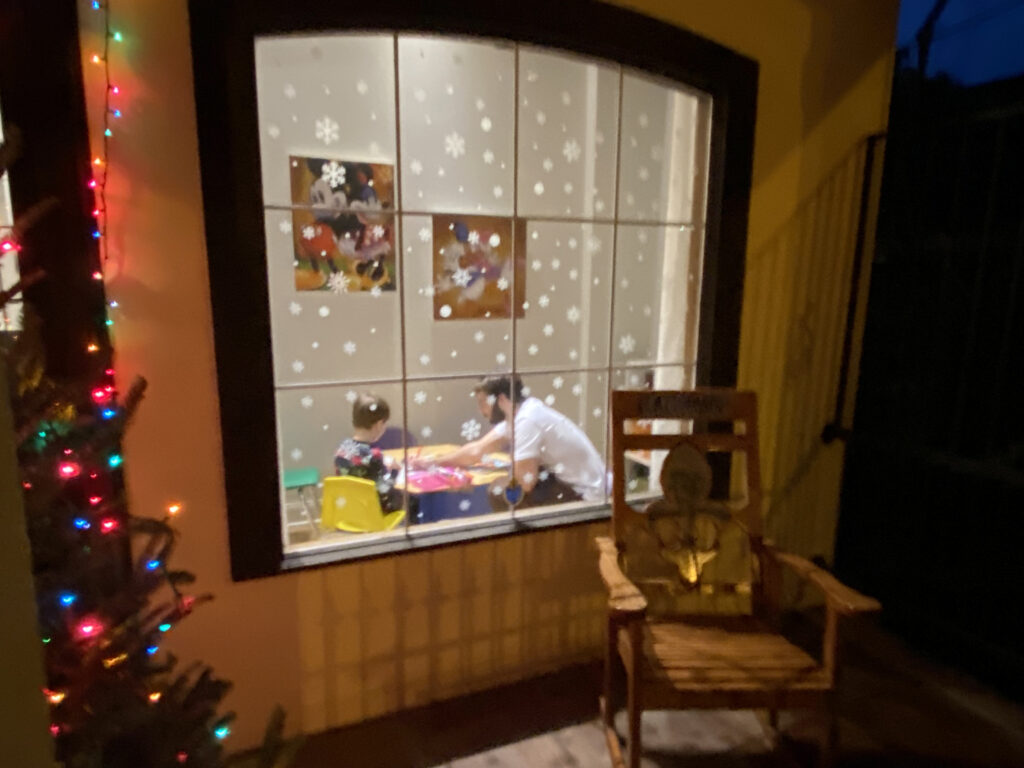
In Baton Rouge, Louisiana, there’s an old Victorian house, bright yellow, the color of the sun as it pokes through the clouds after a storm. It, too, is a symbol of hope. It’s been home to the Baton Rouge Children’s Advocacy Center for 15 years, a nonprofit that has cultivated this building into a safe space for children who have experienced physical abuse, sexual abuse or human trafficking or who are witnesses or victims of violent crime.
To truly explain the value that the Baton Rouge Children’s Advocacy Center brings to its community, it’s essential to look at what may happen without a children’s advocacy center (CAC).
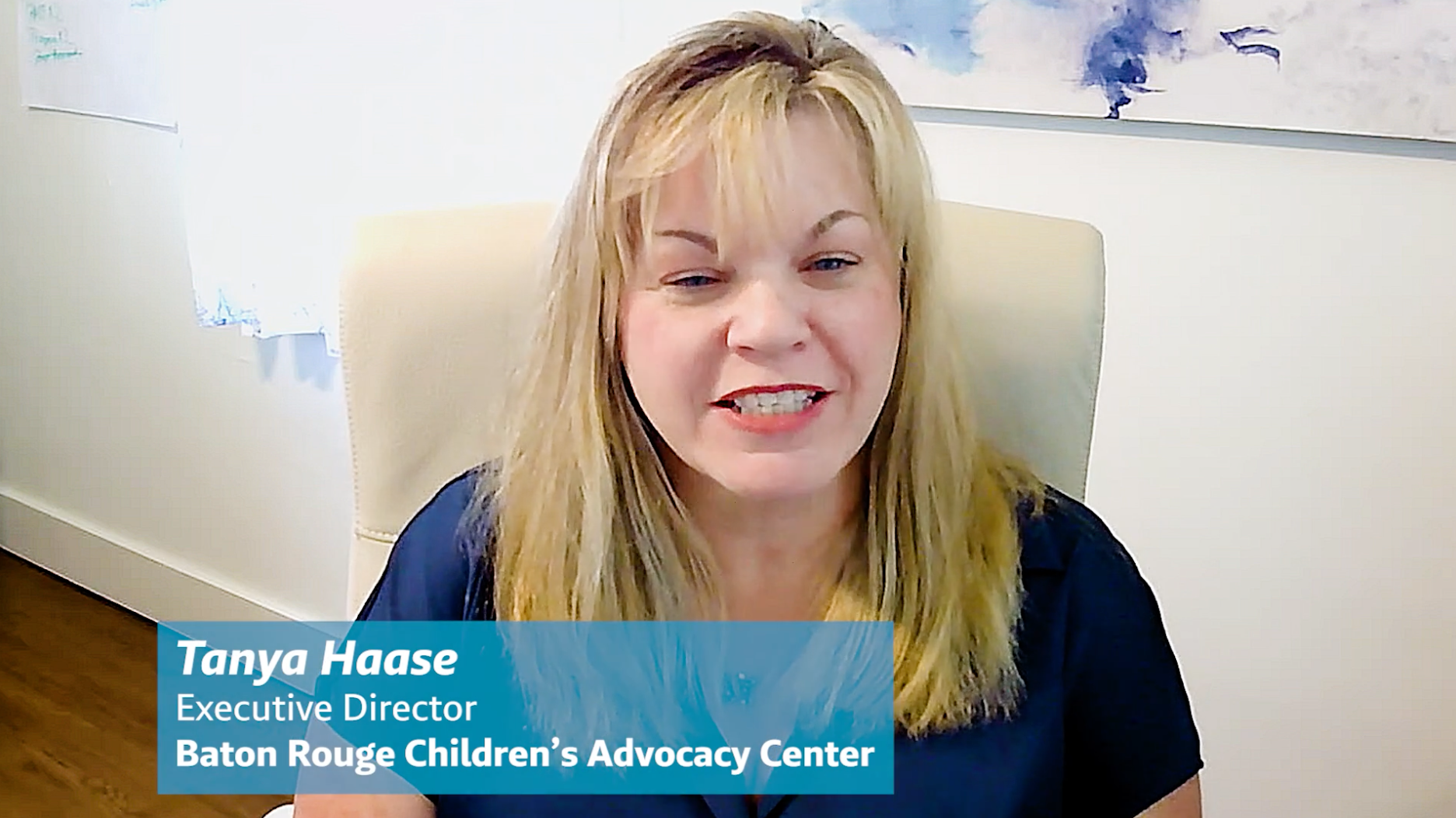
“Before CACs were created, children were interviewed in police stations or in the back of a police car. A child might have to be interviewed in the same location as the alleged perpetrator,” said Tanya Haase, executive director of the Baton Rouge Children’s Advocacy Center. “Can you imagine how intimidating that is for a child knowing that the person who hurt them is in the same building?”
Previously, a child may have had to repeat that same information to therapists, medical personnel, lawyers, investigators or judges. Each retelling retraumatized the child.
But with the Baton Rouge Children’s Advocacy Center, along with other CACs around the country, children have the opportunity to tell their story once and then begin the healing process.
Here’s how it works: A forensic interviewer at the Baton Rouge CAC sits down with the child, provides a safe space and allows the child to speak freely. If the child doesn’t speak English, the team ensures a court-sanctioned interpreter is available.
“Our forensic interviewers don’t ask leading questions,” Haase said. “They establish a rapport with the child to help them feel comfortable in the interview space.”
And if the child needs a little extra support, the forensic interviewer will bring in a special guest from the district attorney’s office, Diesel, a yellow Labrador retriever.
“Sometimes the child won’t talk to the forensic interviewer, but they’ll talk to the facility dog, Diesel, who’s a rock star,” Haase said. “We love him. He’s famous around here.”
The forensic interview is recorded and turned over as part of the chain of custody for evidence for prosecution.
While the child is being interviewed, the Baton Rouge CAC advocate works with a nonoffending caregiver for the child, gathering details about their physical and mental health, as well as any concerns the caregiver may have.
If needed, a child may be referred for a medical exam and treatment. Then it’s time for the multidisciplinary team to take action.
The multidisciplinary team consists of members of the Baton Rouge CAC (a forensic interviewer, advocate and therapist), health professionals, members of law enforcement, the prosecutor, a child protective services caseworker and possibly others, depending on the case. Together, they’ll focus on the child and how best to provide them and their family with the necessary resources. All services are provided at no cost to the child or family.
Of those resources, one of the most important for healing is trauma-focused therapy. The Baton Rouge Children’s Advocacy Center offers individual and group therapy for children as well as group therapy for nonoffending caregivers.
“We are one of a few CACs in Louisiana that have on-site mental health programs,” Haase said.
As the child and family utilize the services the Baton Rouge CAC provides, their advocate will continue to check in on the family at regular intervals, providing additional resources as needed.
The Baton Rouge Children’s Advocacy Center also offers community education and prevention programs. The more people who are educated about abuse, the better the chance the community has to affect change and protect children.
While the work at the Baton Rouge Children’s Advocacy Center is challenging, often leading to vicarious trauma for the employees, the team returns to that sunshine-yellow house each day because they know they’re “fighting the good fight.”
“The people here, they come to work every day because it’s heart work,” Haase said. “You want to protect the children, and you want to make a difference.”
And though it’s difficult, the team looks out for one another, lending an ear, keeping an eye out for when the trauma is getting to be too much and finding ways to let off some steam together. This camaraderie ensures they can return each day to help children in need.
Community impact
Upon receiving the news that the Baton Rouge Children’s Advocacy Center was named an Insperity® Community Hero, the team thought not of themselves but of the impact this would have for CACs across the country.
“By highlighting a CAC across your entire network, think of all the people who then may decide to support a CAC where they live,” Haase said. “So, we get to possibly help another one of our fellow CACs that may only have two employees and is trying to figure out how to make payroll. Hopefully, our blessing blesses others, too.”
As part of its recognition as an Insperity Community Hero, the Baton Rouge Children’s Advocacy Center will receive a $5,000 charitable contribution. Haase said the donation will support jobs within the nonprofit that aren’t covered by grant funding.
While the team wishes there was no longer a need for the services the CAC provides, they remain steadfast in their mission to help children and their families heal.
The compassion the team shows these children ripples out to the community. Haase recalled a conversation she had when running into a young adult who benefited from the Baton Rouge CAC’s services several years ago. She recalled the yellow house. “She said, ‘I remember the yellow house. Y’all healed me, and that’s what I want to do when I finish school,’” Haase said while describing the interaction, “‘because y’all gave me the skills that I needed to help myself.’”
“The house is beautiful, and it’s got the charm, and it’s heard its share of stories. The kids remember that, and that’s pretty powerful for young kids to remember a house after going though such a rough time. It’s the work – the mission of this agency – that people remember. You would think they would want to forget it, but they associate it with the BRCAC helping them. It’s just incredible.”
Tanya Haase
Executive Director
Baton Rouge Children’s Advocacy Center